


Rhinoplasty
The nose is the center of facial balance that affects the harmony of the overall appearance as well as respiratory function. A disproportionate shape, size and structure of the nose, whether congenital, due to trauma or post-operative changes, can affect self-confidence and breathing comfort. Rhinoplasty comes as a surgical procedure to reshape the structure of the nose in a measurable way while still paying attention to aspects of facial function and proportion.
What is Rhinoplasty and How is it Approached?
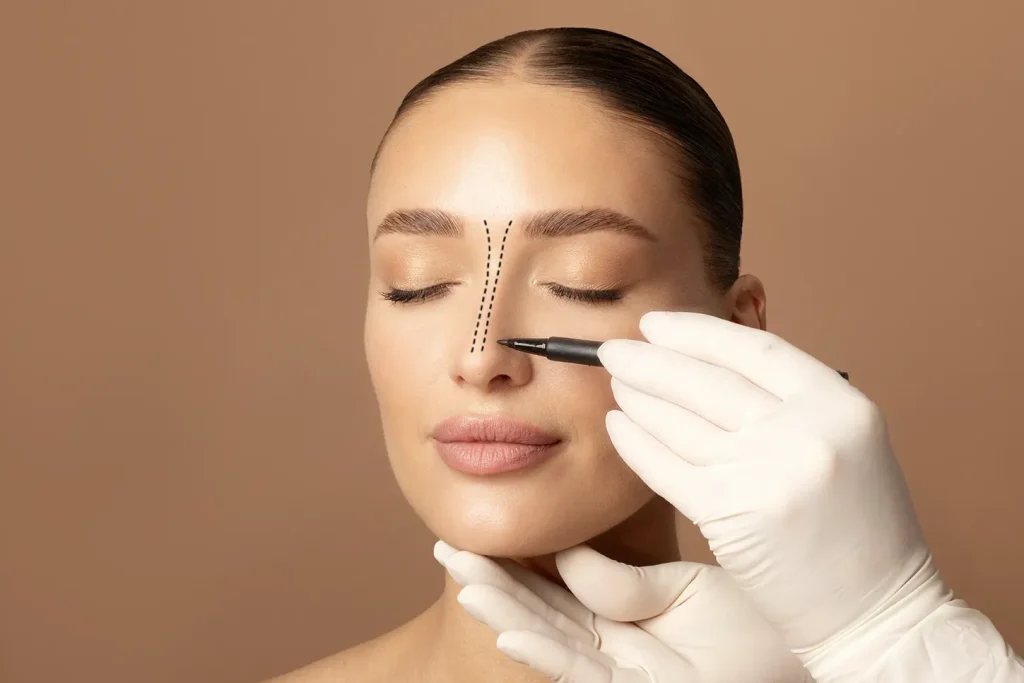
Rhinoplasty is a surgical procedure to shape, repair, or reconstruct the nasal structures, including the bones, cartilages, and soft tissues.
At Dahayu, rhinoplasty is performed with a holistic and personalized approach, taking into account the overall facial anatomy, internal nasal structure and functional needs of the patient. All procedures are performed by specialized plastic surgeons in a RSIA Puri Bunda Denpasar facility with strict hospital standards.
Who Needs Rhinoplasty?
Rhinoplasty may be considered in individuals with the following conditions:
- Nose shape that feels unbalanced with facial proportions
- Nose is too wide, too high, or the tip of the nose is poorly defined
- Congenital nose structure abnormalities
- History of nasal injury or trauma
- Respiratory distress due to abnormalities in the internal structure of the nose
- Dissatisfaction with the results of previous nose jobs
Nose Structure Reconstruction
Realignment of bone and cartilage to provide firm support and a more stable shape.
Procedures that can be performed in blepharoplasty
Rhinoplasty at Dahayu includes both aesthetic and structural approaches, which can be combined according to anatomical needs and goals.
- Aesthetic Rhinoplasty
Aimed at improving the shape and proportion of the nose to harmonize with the face as a whole. In aesthetic rhinoplasty, actions may include:
- Nose Bar Correction
Adjustment of the height, width, or straightness of the bridge of the nose to create a more balanced silhouette.
- Nose Tip Correction (Tip Refinement)
Shaping the tip of the nose to make it look more proportional, neat, and fit the character of the face.
- Use of Septal Cartilage Graft
Using cartilage from inside the nose for mild to moderate correction, especially of the nasal tip structure.
- Use of Ear Cartilage Graft
Used when additional tissue is required for nose tip shaping, while maintaining the shape of the ear.
- Use of Rib Cartilage Graft
Selected in cases that require stronger structural support, such as noses with limited tissue support or revision surgery.
2. Structural & Reconstructive Rhinoplasty
It is performed to correct nasal structures that have problems due to congenital abnormalities, trauma or previous surgery, and to maintain long-term function and stability.
- Septum Correction (Septoplasty)
Rearrangement of the nasal passages to help improve respiratory flow.
How is the Procedure Performed?
- Consultation and evaluation of facial anatomy and nasal structure
- Individualized action planning
- The procedure is performed with open or closed rhinoplasty techniques, according to medical needs
- Actions performed under general anesthesia
- Incisions are strategically placed to maintain a neat result
- Precision bone and cartilage reshaping performed
Security and Risk
Rhinoplasty is a safe surgery when performed by a plastic surgeon with adequate hospital facilities.
Risks include swelling, bruising, minor bleeding, infection, or mild asymmetry, which are generally temporary and can be managed through proper medical monitoring.
Expected Results
- Nose shape is more balanced with facial proportions
- Nose contour looks neater and more structured
- Respiratory function may improve with structural correction
- Changes appear to be gradual as the recovery process progresses
Action Timeline & Recovery Process
Before Action
- Consultation with a plastic surgeon
- General preoperative examination, including: Routine blood test (hematology), Blood chemistry, Blood clotting test, Chest X-ray (if required), ECG (according to patient's age and condition)
- Anesthesiologist consultation
- Pre-op fasting as per medical instruction
- The type and completeness of the examination may differ for each patient's condition at the discretion of the plastic surgeon and anesthesiologist.
Action Day
- Performed under general anesthesia
- The procedure takes place in the operating room RSIA Puri Bunda Denpasar
- Patients generally undergo hospitalization ± 1 night for observation
Day 1-3
- Swelling and bruising in the nose area and around the eyes
- A nasal splint or brace is in place
Day 4-7
- Swelling starts to decrease
- Postoperative control according to the doctor's schedule
Week 2-4
- Splint removed
- The shape of the nose starts to become more pronounced
Month 2-6
- Residual swelling is getting minimal
- The structure of the nose is stabilizing
- Outcomes can be assessed incrementally
Frequently Asked Questions (FAQ)
Does rhinoplasty affect breathing?
No, it is not. In some cases, measures improve respiratory function when accompanied by correction of internal structures.
Will the scars be visible?
The incisions are strategically placed and designed to be inconspicuous.
When will the final results be visible?
Results develop gradually and generally stabilize within a few months.
Conclusion
Rhinoplasty at Dahayu is a personalized nose surgery that prioritizes medical safety, facial balance and nasal function. With the support of plastic surgeons and RSIA Puri Bunda Denpasar facilities, every procedure is structured and medically controlled.
Address:
4th Floor, RSIA Puri Bunda Denpasar 4th floor,
Jl. Gatot Subroto VI no. 19, Denpasar – Bali, 80233
Phone / WhatsApp
+62 811-3821-1907