

Asian boy playing on a tablet; his mother is frustrated
“The neighbor's child can already talk, why can't mine yet?”
This sentence might have crossed Mom and Dad's minds. On one hand, you want to be calm because every child develops differently, but on the other hand, there's a nagging worry that's hard to ignore.
It's true, every child has their own growth and development rhythm. However, it's also important to recognize the signs of speech delay in children so that timely and appropriate stimulation is not missed.

Speech delay is a condition where a child's speech development is slower than that of their peers. This can be seen in delays in uttering words, forming sentences, or responding to communication.
This condition occurs quite often, especially in toddlers, and is closely related to the child's golden age of growth and development—a period when language skills develop very rapidly.
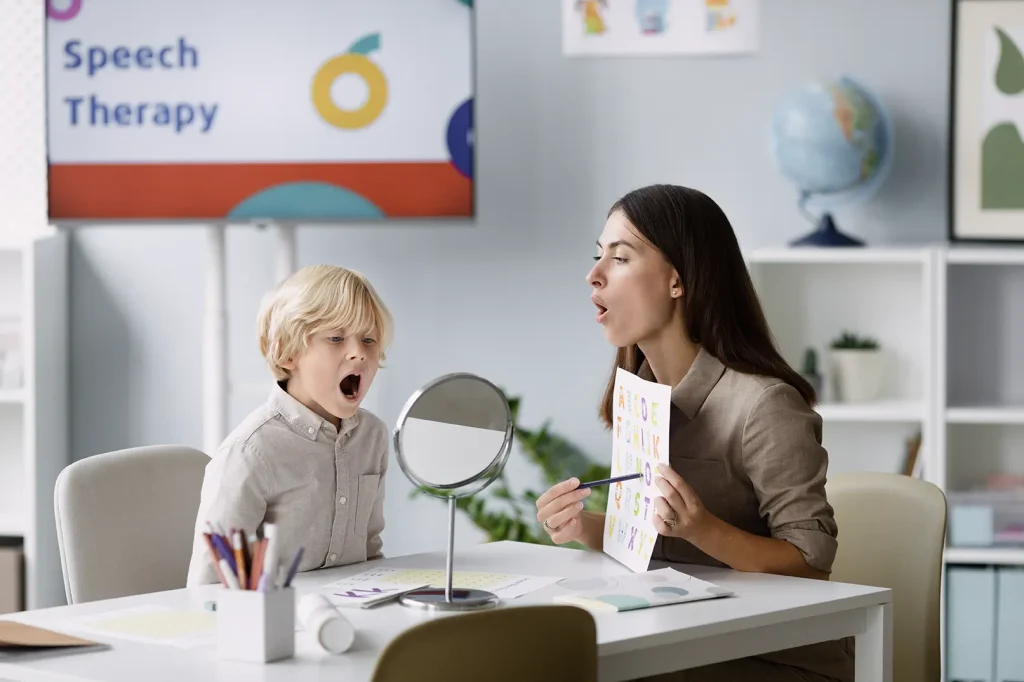
Here are some signs that could be red flags for speech delays in children:
If Mom and Dad start seeing some of the signs above, this could be a signal to conduct early detection of child development.

Speech delays can be caused by several factors, such as:
In some cases, speech delay may also be associated with other conditions, such as social interaction difficulties or the need for further behavioral evaluation, making a comprehensive assessment necessary.

Many parents choose to “wait and see,” hoping their child will catch up on their own. However, if the delay persists, it’s best not to put off seeking professional advice.
The sooner the evaluation is conducted, the greater the child’s chances of developing to their full potential with the right support.
Through the child development services at ViDaStana – RSIA Puri Bunda, parents can:
If needed, the child can follow:
This approach helps ensure a child receives proper and comprehensive treatment.

Simple activities at home can be a great first step, such as:
These small things are very helpful for a child’s language development, especially during the golden age.
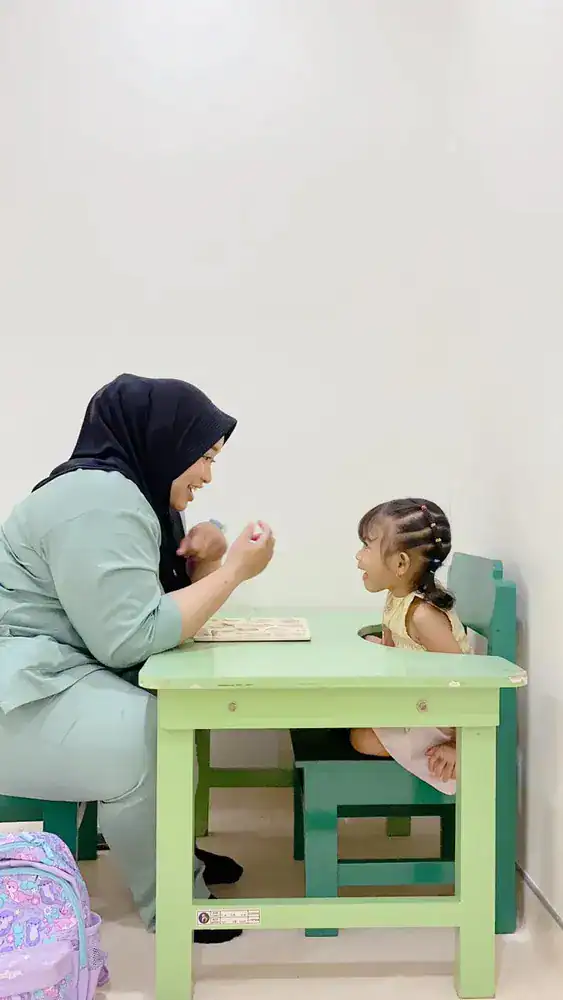
Recognizing the signs of speech delay in children doesn’t mean parents should panic; rather, it’s a sign of their concern for their child’s growth and development.
Just as with early detection of growth and development, small steps taken early on can have a big impact in the future.
Every child has their own journey. With the right support, they can still grow and develop to their full potential
Want to make sure your little one’s growth and development are on track for their age?
Click Here To Schedule a Growth and Development Screening at VidaStana → [WA Vida +62 811-3899-766]
Yes, speech delay is very likely to improve, especially if recognized and addressed early on. Many children show significant progress after receiving the right stimulation and, if necessary, speech therapy. At ViDaStana, our speech therapy programs are designed according to each child's individual needs to achieve optimal results.
Generally, boys do tend to develop speech a little more slowly than girls. However, if the delay goes beyond their age milestones, an evaluation is still necessary to ensure there are no other developmental obstacles.
Excessive gadget use without two-way interaction can increase the risk of speech delays. Children need direct communication to learn language, not just to hear sounds from a screen.
If a child has not reached their age-appropriate speech milestones or shows signs of delay, developmental screening should be performed promptly. Early evaluation helps determine if the child only needs stimulation or requires therapy.
Not always. Speech delay can occur independently. However, in some cases, it can be part of other conditions, requiring a comprehensive evaluation by a doctor and psychologist to determine the exact cause.
Reference
Black, M. M., et al. (2017). Early childhood development coming of age: science across the life course. The Lancet.
Gunardi, H. (2021). Optimizing the First 1,000 Days of Life. eJKI.
World Health Organization (WHO). (2018). Early Childhood Development and Disability.