
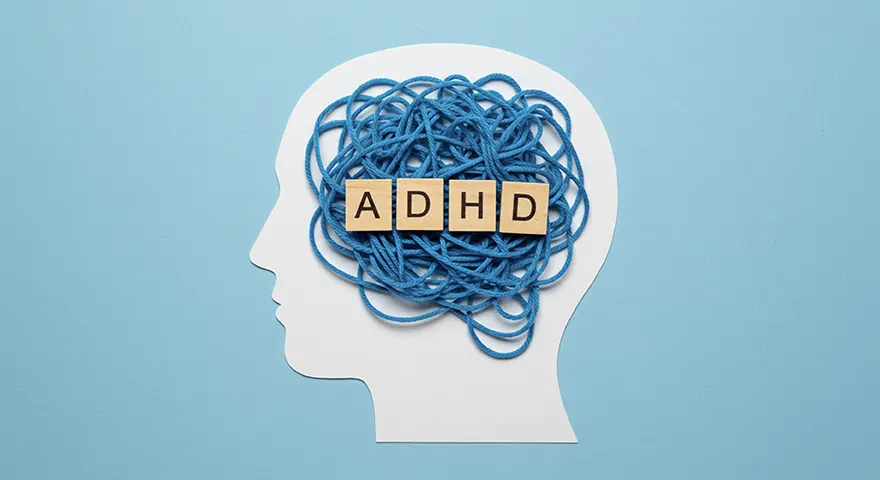
ADHD awareness: mind-brain concept
“My child is so active, running everywhere, hard to sit still... is this normal or ADHD?”
This question often comes to parents' minds. Especially during the golden age of the first 1,000 days, children are indeed full of energy and curiosity. However, on the other hand, there are worries about whether this behavior is still normal or is already leading to disorders like ADHD.
Understanding the difference between an active child and ADHD is very important, so that mothers and fathers don't worry too much, but also don't ignore signs that need attention.
Basically, an active child is a healthy child. They enjoy moving, exploring, and trying new things. This is an important part of the learning process, especially during a child's golden age of development.
Being active isn’t a problem; it’s actually a sign of healthy development.

ADHD (Attention Deficit Hyperactivity Disorder) is a developmental disorder that affects a child's ability to regulate attention, impulse control, and activity.
Unlike typical active children, children with ADHD exhibit behavioral patterns that:
To make it easier to understand:
Active Child | ADHD |
Still able to focus on what you like | It's hard to focus even on things I enjoy |
It can be guided even though it takes time | Very difficult to direct |
Active in certain situations | Overly active in almost every situation |
Does not significantly interfere | Disrupting activities & interactions |
Can still follow instructions | Often have difficulty following instructions |

Parents need to be more vigilant if their child shows:
This condition can be a part of developmental red flags and is related to the need for early detection of child development.

Not all active children have ADHD. Labeling too quickly can actually make parents overly anxious.
Conversely, ignoring existing signs can also delay a child from getting help.
The balance between “calm” and “sensitive” is key.
If a child’s behavior seems excessive, occurs consistently, and begins to interfere with daily activities, it is advisable to begin an evaluation.
Through the child development services at ViDaStana – RSIA Puri Bunda, children can undergo:
If needed, the child can follow:
This approach helps to understand the child's condition more accurately, so that the intervention provided is more appropriate.

Early support helps children manage their energy better.
Things you can do at home:
As with other conditions, understanding a child’s growth and development starting from the golden age and conducting early detection are crucial steps in fully supporting a child’s potential.
No. It’s normal for children to be active, especially at a young age. ADHD involves behavioral patterns that are more consistent, intense, and disruptive to daily activities. To confirm a diagnosis, a comprehensive evaluation is needed, including behavioral observation by a professional.
Signs of ADHD can begin to appear at an early age, but a comprehensive evaluation is needed to confirm the diagnosis. Developmental screenings and assessments by a psychologist can help determine whether a child’s behavior is within normal limits or requires special attention.
ADHD doesn’t go away completely, but it can be effectively managed. With the right therapy, support, and appropriate strategies, children can still thrive in their daily activities.
Not all children require therapy right away. The results of the evaluation will determine the child’s needs. However, if the behavior is already interfering with daily activities, therapies such as behavioral therapy or occupational therapy can help improve focus and self-control.
Psychologists play a role in assessing behavior, helping to understand a child’s emotional and attention patterns, and providing appropriate strategies. This support is essential to ensure that the interventions provided are truly tailored to the child’s needs.
Reference
American Psychiatric Association. (2013). Diagnostic and Statistical Manual of Mental Disorders (DSM-5).
World Health Organization (WHO). (2018). Early Childhood Development and Disability.
Black, M. M., et al. (2017). The Lancet: Early Childhood Development.